
Teaching Curiosity: Hospitality, Disorientation, and Care in Storytelling
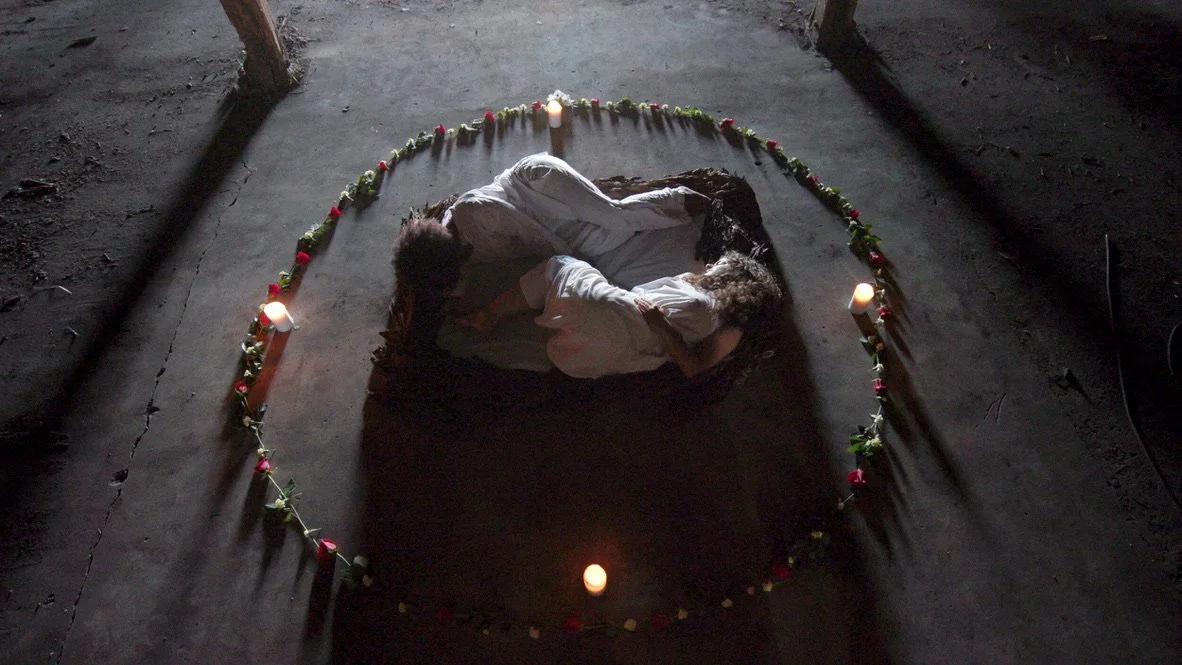
What does it mean to teach performance and storytelling from a place of care?
My work sits at the intersection of somatic storytelling, performance pedagogy, and reproductive justice. As a full-spectrum doula and facilitator, I move between birth work, abortion care, and artistic research spaces. Across these contexts, I return to one central question:
How do we practice being with each other—especially in moments that are complex, vulnerable, or not easily understood?
This is where curiosity becomes a method. And where hospitality becomes a practice.
Curiosity as a Practice in Somatic Storytelling
In many performance and storytelling spaces, the emphasis is on expression—finding and sharing one’s voice.
But in my work, particularly in abortion storytelling and reproductive care spaces, the deeper practice is learning how to receive.
Curiosity is not about asking for more detail or making someone’s experience legible. It is about:
staying present without needing resolution
noticing the impulse to interpret or fix
allowing stories to remain partial, nonlinear, or unsaid
In somatic storytelling, this becomes embodied. Participants are invited to track sensation, breath, and internal response—shifting attention away from producing a narrative and toward being in relation.
This is especially important in reproductive storytelling, where experiences of abortion, pregnancy, or birth often resist neat or coherent narratives.
Hospitality as a Reproductive Justice Practice
Hospitality, in this context, is not just about inclusion. It is about building conditions where different experiences of the body—particularly those shaped by stigma, silence, or medicalization—can exist without pressure to conform and feel welcomed through overt invitation.
Within abortion storytelling workshops and reproductive justice spaces, hospitality might look like:
not requiring anyone to share verbally
allowing stories to emerge through movement, image, or sound
making space for ambivalence, contradiction, or opacity
centering consent at every stage of participation
Hospitality becomes a form of care work—a way of redistributing power and returning agency to participants.
This approach is deeply aligned with the values of reproductive justice, which insists not only on the right to make decisions about one’s body, but on the conditions necessary to live and express those decisions with dignity.
Emergent Strategy in Facilitation and Care Work
The way we hold space in a workshop, how we listen, how we respond, how we structure participation, matters.
Drawing on adrienne maree brown’s Emergent Strategy, I understand facilitation as a series of small, relational actions that scale outward. A storytelling circle, a performance lab, or a care space becomes a site where we practice the kinds of relationships we want to build beyond it.
In both artistic research and doula work, this means:
responding to what is present rather than imposing a fixed structure
trusting process over outcome
valuing interdependence over individual performance
Curiosity and hospitality function here as emergent practices: adaptive, relational, and grounded in care.
Disorientation in Queer, Crip, and Reproductive Contexts
Experiences like abortion, pregnancy, and birth are often disorienting. They can disrupt timelines, expectations, and our sense of self.
Rather than treating disorientation as something to resolve, I work with it as a critical pedagogical tool.
Influenced by Sara Ahmed, disorientation describes moments when we lose our bearings and familiar frameworks no longer hold. In both performance practice and reproductive care, these moments, met with care, can be rich with potential.
Through queer and crip methodologies, disorientation allows us to:
challenge dominant narratives around what bodies should do or feel
interrupt expectations of coherence, productivity, or “positive” storytelling
create space for complexity, grief, relief, ambivalence, and contradiction
In abortion storytelling, especially, disorientation is not a failure of narrative or “regulation”; it is often the most honest expression of lived experience and somatic integration.
What This Looks Like in Practice
Across my work in performance workshops, reproductive storytelling circles, and facilitation trainings, I develop structures that support curiosity and care:
starting with somatic awareness rather than verbal sharing
practicing witnessing without interpretation or response
offering multiple modes of participation (movement, writing, sound, silence)
co-creating access and consent as ongoing processes
allowing stories to remain incomplete or held privately
These practices are designed for artists, educators, and organizations working in:
contemporary performance and dance
somatic and embodied practices
reproductive justice and abortion care
community-based and socially engaged art
trauma-informed facilitation and education
Why This Matters
Reproductive experiences—whether abortion, birth, or loss—are often shaped by silence, stigma, and institutional control.
Artistic and pedagogical spaces have the potential to interrupt this.
By teaching curiosity and practicing hospitality, we create environments where people can encounter these experiences differently:
without needing to justify or explain
without being reduced to a single narrative
without being rushed toward resolution
This is not only an artistic practice. It is a political and relational one.
Work With Me
I offer workshops, storytelling labs, and facilitation trainings that integrate somatic practice, performance, and reproductive justice.
These include:
abortion storytelling and somatic archiving workshops
care-based performance and facilitation trainings
programs for universities, arts institutions, and community organizations
If you’re interested in collaborating or bringing this work into your space, you can get in touch here.